Nobody Wins, Nobody Quits: The Endless Loop of Entertainment Fandom Fights
Somewhere on the internet right now, two strangers are in a heated argument about a fictional couple that stopped being relevant three seasons ago. One of them has a carefully organized thread of receipts. The other has a 47-tweet response ready to paste. Neither of them will change their mind. Neither of them will stop.
Welcome to the discourse graveyard — a place where no entertainment argument ever truly gets buried.
We've Been Having the Same Fight Since 2009
Think about any major fandom debate you've witnessed in the last decade. The Team Edward vs. Team Jacob split. The debate over whether a certain Game of Thrones season ruined the entire series. The ongoing fury over a live-action remake that someone, somewhere, insists was actually fine. These conversations don't end. They go dormant for a while, then a reboot gets announced or an actor gives an interview and suddenly the whole thing is back on your timeline like it never left.
What's wild is that most of these debates don't have a factual resolution waiting at the finish line. They're not arguments about whether something happened — they're arguments about meaning, identity, and taste. And those kinds of arguments? They don't close. They just accumulate.
The interesting question isn't why people argue about entertainment. That part makes total sense — stories matter to people, and when something matters, you want to defend it. The interesting question is why the arguments never resolve, even when the source material is long gone.
Your Favorite Show Is Actually a Mirror
Here's the part that's a little uncomfortable to sit with: a lot of these debates stopped being about the entertainment a long time ago.
When someone is fiercely defending a particular fictional ship or insisting a specific casting choice ruined a franchise, they're often defending something much closer to home. Their taste. Their community. The version of themselves that fell in love with something when they were sixteen. Walking away from the argument — even a little — can feel like abandoning a piece of who you are.
Parasocial relationships make this even stickier. When you've spent hundreds of hours with a creator's content, a character's arc, or a band's discography, you develop a genuine emotional investment that doesn't follow normal social logic. Criticism of the thing you love can genuinely feel like criticism of you. That's not irrational — it's just how deep media consumption actually works on people. But it does mean that what looks like a debate about a TV show is sometimes a debate about personal identity, and those don't wrap up neatly in a Twitter thread.
The Platform Doesn't Want It to End
Let's also be honest about the environment these arguments live in, because it matters.
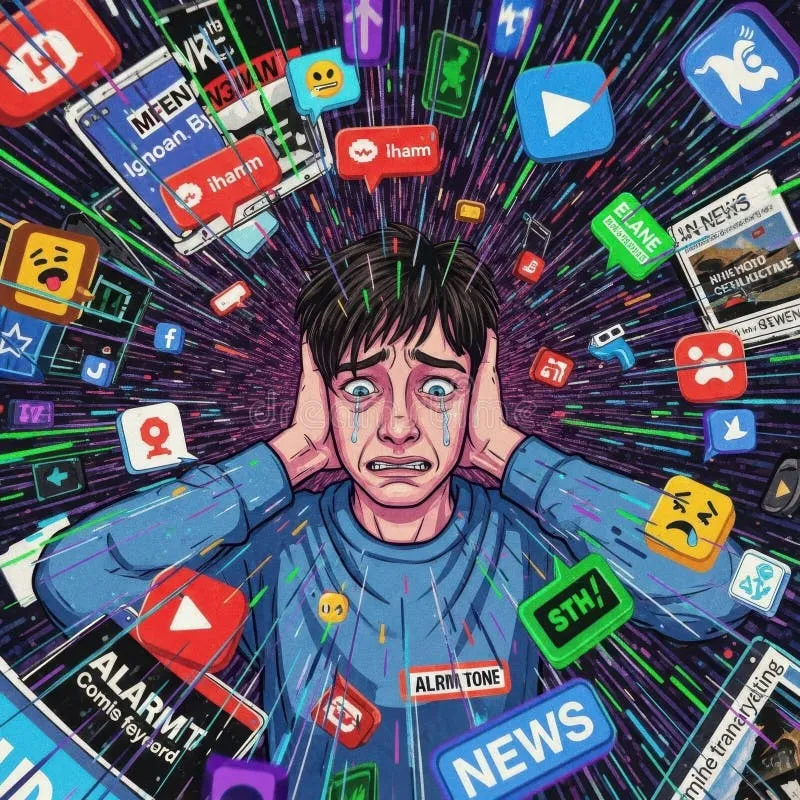
Social media platforms are not neutral spaces where ideas get tested and the best one wins. They're designed to maximize engagement, and nothing drives engagement quite like unresolved conflict. A take that makes people feel genuinely seen tends to get a polite number of likes and then disappear. A take that makes people furious? That one travels. The algorithm isn't picking sides in your fandom war, but it is absolutely rooting for the war to continue.
Every time a discourse thread resurfaces — every time someone quote-tweets an old argument with "this is still happening, by the way" — it's a gift to the platform. The content is free, the engagement is real, and the company doesn't have to do anything except make sure the button to reply is always one tap away.
This isn't a conspiracy theory. It's just the basic incentive structure of attention-based businesses. Unresolved conflict is a renewable resource, and fandom communities produce it at scale.
Tribal Affiliation and the Cost of Switching Sides
There's another layer here that social scientists would recognize immediately: group identity.
Once you've publicly staked a position in a fandom debate — once you've written the thread, made the video, or spent six months in a Discord server defending your interpretation — the social cost of changing your mind gets very high. Your community expects consistency. Switching sides, or even softening your stance, can feel like betrayal. So people double down, not necessarily because they've found new evidence, but because retreating is socially expensive.
This is the same dynamic that makes political arguments so exhausting, and it shows up in entertainment spaces with surprising intensity. The stakes are theoretically lower — we're talking about fictional characters, after all — but the social mechanics are identical. Nobody wants to be the person who was wrong in public about something they cared about loudly.
So the argument continues. Not because anyone thinks they're going to win, but because stopping feels like losing.
Is Perpetual Argument Actually a Problem?
Here's a genuine question worth sitting with: does any of this need to be fixed?
There's an argument — and Blogos is a place that takes all kinds of arguments seriously — that perpetual entertainment discourse is actually a feature of a healthy, engaged culture. People are talking. People are thinking about what stories mean and why representation matters and how creative decisions affect audiences. That's not nothing. The fact that the conversation doesn't end might mean the subject is genuinely rich enough to keep generating new angles.
Shipping wars look silly from the outside, but they're often proxies for real conversations about queer representation, about which relationships media decides to legitimize, about whose love stories get happy endings. The debate about a live-action remake isn't really about the remake — it's about nostalgia, ownership, and what it means when a corporation decides to revisit something you grew up loving.
The problem isn't that people are arguing. The problem is that the platforms hosting those arguments have no interest in helping them go anywhere productive. There's no infrastructure for resolution, no mechanism for nuance, and no incentive to build one. The discourse graveyard isn't a failure of the audience — it's a failure of the architecture.
What You Can Actually Do With This Information
Probably nothing, honestly. You're still going to get pulled into the next fandom argument. So am I. That's fine.
But it's worth knowing, before you type the reply, that the platform wants you to stay mad. It's worth knowing that your investment in the argument might be about something more personal than the fictional universe in question. And it's worth knowing that the person on the other side of the thread is probably not going to change their mind, not because they're unreasonable, but because the same dynamics that are keeping you in the conversation are keeping them there too.
The discourse graveyard keeps filling up because we keep showing up to dig. Maybe the most radical thing you can do is notice that — and occasionally, just occasionally, put the shovel down.