Gone in 72 Hours: Why Your Best Entertainment Take Dies Before Anyone Reads It
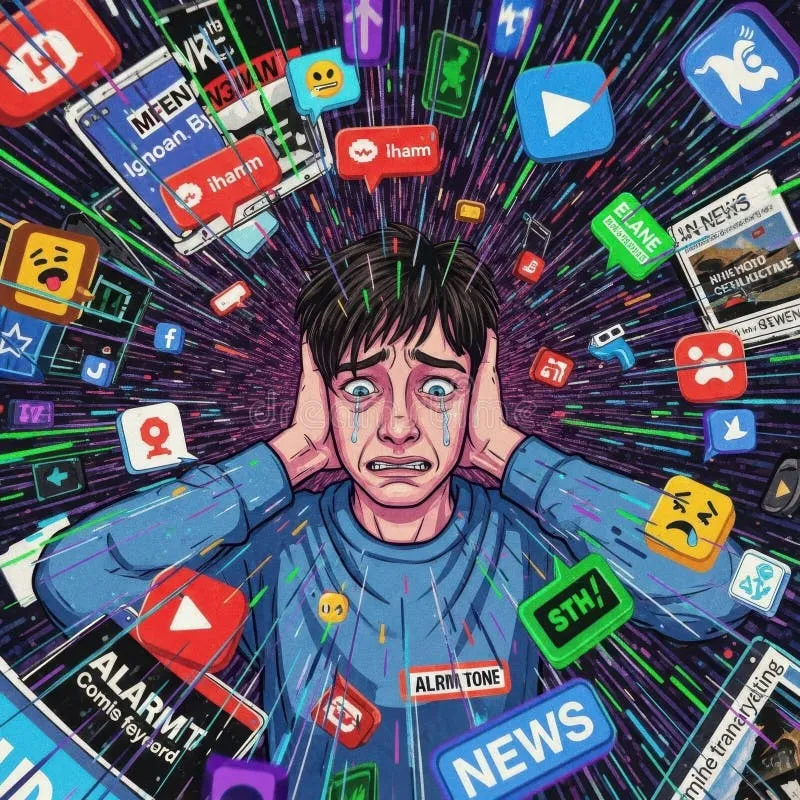
Photo: person looking at phone social media scroll overwhelmed notifications, via thumbs.dreamstime.com
Somewhere out there, a very smart person wrote a very good post about The Bear. Or Succession. Or whatever show everyone collectively lost their minds over last week. They pulled receipts, structured their argument, maybe even cited an interview the showrunner gave back in 2019. It was thoughtful. It was fair. It was exactly the kind of take that used to define how we talked about television.
And approximately 40 people saw it before the algorithm buried it under a pile of dunks, reaction GIFs, and someone's hot take that aged like warm milk.
This is the discourse graveyard. Population: every nuanced entertainment opinion you've ever had.
The 72-Hour Clock Is Already Ticking
Here's how the cycle works now. A show drops, a movie releases, an artist puts out an album. Within hours, the first wave of reactions floods every platform simultaneously — X (formerly Twitter), TikTok, Reddit, Threads, Instagram Stories. By the next morning, the think-pieces are up. By day two, the backlash to the think-pieces is trending. By day three, something else has happened and the whole conversation resets.
Seventy-two hours. That's roughly the window a piece of entertainment discourse has before it becomes culturally irrelevant, regardless of its quality.
Content creator Maya Osei, who runs a pop culture commentary channel with around 85,000 subscribers on YouTube, has watched this pattern play out enough times to almost predict it. "I'll spend a week on a video that really digs into something — like the economics of a streaming cancellation or the racial dynamics in a particular casting choice — and it'll do fine," she says. "But a two-minute reaction clip I filmed in my car? That's the one that blows up. The algorithm doesn't care that I did homework."
The platforms themselves aren't neutral here. They're optimized for velocity, not depth. Engagement spikes on controversy and novelty, not on careful analysis. So the incentive structure actively punishes the kind of slow-burn, evidence-based cultural conversation that used to happen in magazine columns and late-night dorm rooms.
When Everyone's Talking, Nobody's Listening
There's a particular irony at the center of all this: we've never had more access to entertainment opinions, and we've arguably never had less actual debate. What passes for discourse on most platforms is less a conversation and more a series of parallel monologues happening in the same general direction.
Part of this is structural. On X, a thread longer than a few posts loses most of its audience before the third tweet. On TikTok, nuance competes directly with a video of someone's dog doing something cute. Reddit gets closer — threaded replies allow for actual back-and-forth — but even there, the most upvoted comment tends to be the funniest or the most validating, not the most accurate.
Blogos contributor and media critic Daniel Fray put it bluntly in a piece he wrote last spring: "We've built platforms that are structurally allergic to being wrong slowly." What he means is that good arguments often require revision. You float an idea, someone pushes back, you update your thinking. That process takes time — time the content cycle simply doesn't allow.
The Shelf-Life Problem Is Changing What Gets Said
If you're a creator who lives and breathes entertainment commentary, the perishable nature of discourse shapes what you choose to talk about — sometimes in ways you're not even fully conscious of.
Jamila Renner, who co-hosts a weekly pop culture podcast out of Atlanta, admits her team has started factoring "discourse momentum" into their episode planning. "We used to record based on what we actually wanted to talk about," she says. "Now we're constantly asking: is this still going to feel relevant by the time we edit and publish? Sometimes we'll drop a whole segment because the conversation moved on while we were in post-production."
The result is a kind of preemptive self-censorship — not of opinions, but of depth. Why invest in a fully developed argument about a show's thematic failures if the audience will have already formed their take and moved on? The safer play is to be fast and loud rather than slow and right.
This creates a feedback loop that's genuinely bad for culture. If thoughtful takes don't get traction, creators stop making them. If creators stop making them, audiences don't expect them. And if audiences don't expect them, the standard for what counts as good entertainment discussion quietly drops.
So Does Any of This Actually Matter?
Here's where it gets complicated, because the pessimistic read — that social media has completely destroyed our ability to have meaningful cultural conversations — isn't quite right either.
Some discourse does survive. The arguments that get screenshot and reshared, that get cited in YouTube essays months later, that become reference points in future conversations — those exist. They're just a small fraction of everything being said. And interestingly, they tend to share a few qualities: they're either extremely funny, extremely controversial, or they said something genuinely true that people needed a framework for.
Maya Osei points out that some of her most-referenced older videos still drive new subscribers years later. "The stuff that holds up is usually the stuff that was about something bigger than just the show," she says. "If I was really talking about grief, or identity, or how we treat women in creative industries — and I just happened to use a TV show as the entry point — that has legs. Pure reaction content doesn't."
There's a lesson buried in there. The entertainment takes that escape the graveyard are the ones that were never really just about the entertainment.
Finding the Slow Lane
A small but growing number of creators are deliberately opting out of the speed race. Newsletters, long-form podcasts, and Substack-style commentary are having a moment precisely because they offer something the algorithmic platforms can't: permission to take your time.
The audience for slower, more considered entertainment writing is smaller, but it's also more loyal and more engaged. People who subscribe to a newsletter about film criticism aren't there for breaking takes — they're there because they trust the voice and want to think more carefully about what they're watching.
It won't fix the discourse graveyard. The 72-hour cycle isn't going anywhere. But it does suggest there's a parallel track forming — one where depth isn't a liability, where being right eventually matters more than being first, and where your carefully constructed argument about that season finale might actually find the audience it deserves.
Just don't hold your breath waiting for the algorithm to help you get there.