Where Did That Debate Even Go? The Strange Afterlife of Internet Entertainment Arguments

Photo: Japanexperterna.se, CC BY-SA 2.0, via Wikimedia Commons
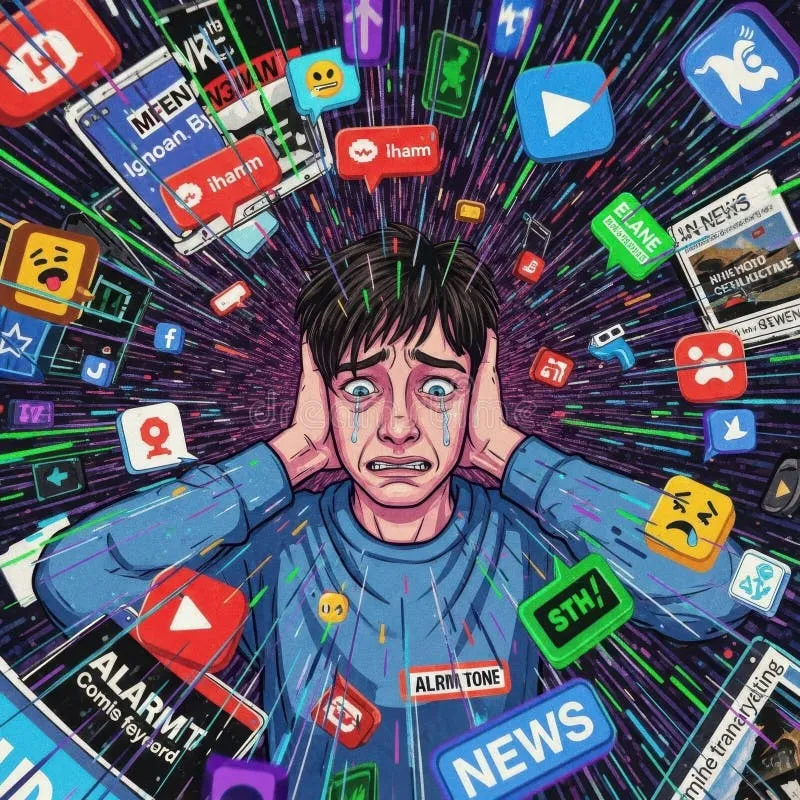
You remember it. Maybe it was a casting choice that sent Twitter into full meltdown. Maybe it was a finale that split an entire fandom down the middle so cleanly you could almost hear the crack. For three, maybe four days, it was everywhere — trending tabs, group chats, YouTube video essays, Reddit megathreads. People were writing paragraphs. People were making graphics. People were passionate.
And then it was gone.
Not archived. Not resolved. Just... gone. Like it never happened.
This is something that almost no one talks about directly, even though it happens constantly: the way entertainment debates don't just die down — they get erased. And the more time passes, the harder it becomes to even prove they existed in the first place.
The Platform Shuffle Is Eating Our Cultural Memory
Part of what's happening here is structural. The places where we argue about entertainment are not built to preserve anything. Twitter — now X — has become notoriously unstable as an archive. Accounts get deactivated. Tweets get deleted. Whole threads that once functioned as the definitive record of a cultural moment disappear the second someone rage-quits the platform or quietly cleans up their posting history.
And people do clean up their histories. Regularly. Sometimes out of embarrassment (hello, every hot take anyone wrote during peak prestige TV discourse), sometimes because a job is on the line, and sometimes just because the algorithm started surfacing old posts in weird ways and it felt like time for a purge.
Tumblr is its own cautionary tale. Huge swaths of mid-2010s fandom conversation — the kind of deeply specific, emotionally intense cultural analysis that only fan communities produce — got wiped out during the platform's 2018 content purge. A lot of it was never recovered. What survived exists in screenshotted fragments, passed around like photocopies of photocopies.
Facebook groups, which hosted genuinely massive entertainment debates throughout the early 2010s, are now essentially inaccessible to anyone who wasn't there. The conversations are technically still on the platform, but good luck finding them. The search function is a disaster, the groups have often gone private or dissolved entirely, and the posts are buried under years of noise.
The Algorithm Doesn't Want You Looking Backward
Here's the thing most people don't fully reckon with: platforms are economically incentivized to push you toward new content, not old arguments. Every major social media algorithm is designed around recency and engagement velocity. A debate that peaked four days ago is, from the platform's perspective, basically ancient history.
This means that even when old conversations technically still exist, they become functionally invisible. Nobody's engaging with them, so they don't surface. Nobody can find them, so nobody engages with them. It's a disappearing loop.
What this creates is a kind of cultural amnesia that's almost uniquely modern. In the pre-internet era, entertainment arguments left physical traces — magazine op-eds, letters to editors, talk show transcripts. Those things got preserved because the medium required it. Digital conversation, by contrast, feels permanent but is actually extraordinarily fragile. It exists right up until it doesn't.
What We Actually Lose
Okay, but does it matter? Entertainment arguments are mostly pretty low-stakes, right? Maybe losing them is just... fine?
Not entirely. Here's what actually disappears when these conversations go:
Context for how cultural tastes shifted. The debates we had about a show or an artist in real time are some of the best evidence we have for understanding how audiences were actually responding — not the sanitized retrospective version, but the messy, contradictory, emotionally raw version. When that disappears, we lose the texture of the moment.
Credit for the people who were right early. Fan communities are often ahead of mainstream critics by months or years. The arguments being made in niche forums about a now-celebrated album or a slow-burn TV series frequently predate the official cultural consensus by a significant margin. When those conversations vanish, so does the paper trail proving that regular viewers and listeners were doing serious cultural work long before the think pieces arrived.
The record of bad-faith arguments. Some of the debates that get erased weren't just forgotten — they were actively deleted by people who'd rather not be associated with them anymore. That's not always a bad thing, but it does mean that the internet's memory of certain controversies gets selectively edited in ways that tend to favor whoever had the power to do the deleting.
The Fandoms That Refuse to Forget
Not everyone is just letting this happen. Some fan communities have gotten genuinely serious about preservation — and it's worth paying attention to why.
Long-running fandoms with strong archival instincts, like those built around certain sci-fi franchises or decades-spanning music artists, often maintain their own wikis, Discord archives, and dedicated preservation accounts specifically because they've watched earlier conversations disappear and decided not to let it keep happening. The Organization for Transformative Works, which runs Archive of Our Own, was literally founded in part to protect fan-created work from platform collapse.
Other communities use screenshot culture as a form of informal archiving — not always for noble reasons (screenshots spread fast when someone's trying to expose bad behavior), but with the side effect of preserving conversation fragments that would otherwise be lost.
What these communities understand is that their history is their culture. The arguments, the debates, the moments where the fandom fractured and then (sometimes) came back together — that's the story of what it meant to care about something. Letting it vanish means letting a piece of the community's identity vanish with it.
Maybe We Should Care More About This
There's something a little disorienting about living in an era of unprecedented communication volume where so little of what we say actually sticks. We're generating more cultural conversation than any previous generation, and we're preserving less of it than almost any previous generation, because the tools we're using weren't built with preservation in mind.
That's not a reason to spiral. But it is a reason to think differently about where we have our conversations and what we do with them afterward. The discourse graveyard is real — and it's filling up faster than most people realize.
Next time you're deep in a comments section arguing about something you genuinely care about, it might be worth asking: will anyone be able to find this in five years? Will you be able to find it?
Probably not. But at least now you know why.