The Fans Are Writing the Script Now: How Audiences Became the Most Powerful Force in Celebrity Culture
Photo: Evgeny2665, CC0, via Wikimedia Commons
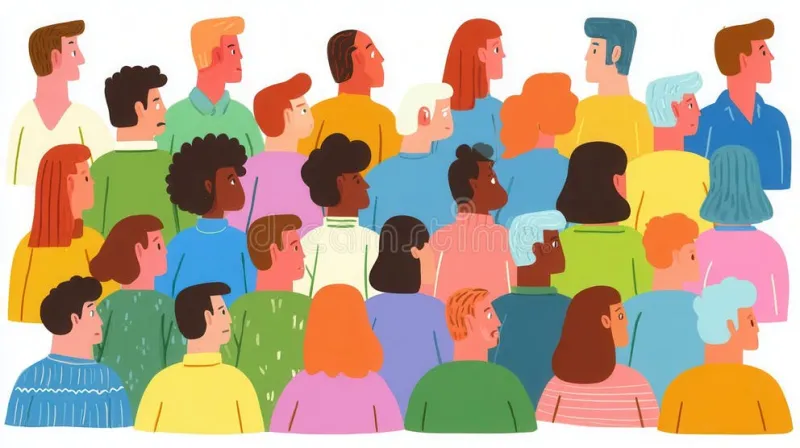
There's a moment that happens in almost every major celebrity controversy these days — a beat right after the initial news breaks — where the real story stops being about what the celebrity did and starts being about what the fans decide it means. The comment sections fill up. The stan Twitter accounts mobilize. The Reddit threads go three hundred pages deep. And by the time the dust settles, the narrative that sticks often has less to do with facts and more to do with whichever fan community argued loudest, most creatively, and most persistently.
We've entered a strange new era of fame. And honestly? It's worth examining without flinching.
From Audience to Author
For most of entertainment history, celebrities existed in a kind of controlled mythology. Studios managed their images, publicists shaped their stories, and fans consumed whatever was handed to them through magazines, late-night interviews, and carefully orchestrated press tours. The power dynamic was clear: the famous person was the text, and the fan was the reader.
Social media didn't just add a comments section to that dynamic. It fundamentally restructured it. Now fans have platforms with real reach. A stan account with 200,000 followers on X (formerly Twitter) can surface an old interview clip, frame it a specific way, and push it into mainstream discourse within hours. A well-organized fandom can flood a hashtag, manipulate streaming numbers, tank a Rotten Tomatoes score, or conversely, resurrect a canceled project through sheer coordinated volume.
They're not reading the text anymore. They're editing it.
The Case Studies Are Wild
Let's be concrete, because the abstract version undersells how genuinely strange this has gotten.
Fan communities have successfully pressured streaming platforms into reversing cancellation decisions — Manifest on Netflix being one of the more prominent recent examples, where audience campaign pressure played a visible role in the show's revival conversation. That's fans influencing corporate entertainment decisions. Not through purchasing power alone, but through organized, sustained narrative pressure.
On the celebrity side, stan accounts have done everything from compiling receipts that exposed problematic behavior before mainstream media caught on, to aggressively constructing alternate explanations for controversies that protected their favorite artists. In some cases, coordinated fan responses have preceded and arguably shaped official public apologies from celebrities — the community identifies the problem, amplifies it, and essentially forces a response that then gets folded back into the celebrity's public narrative.
And then there are the conspiracy theories. The ones about celebrity relationships being staged, feuds being manufactured, or entire public personas being constructed performances. Some of these are obviously detached from reality. But some of them — uncomfortably — turn out to have a kernel of truth, which only encourages the next round of speculation.
The Ethics Get Complicated Fast
Here's where it gets genuinely thorny, and where it's worth sitting with the discomfort rather than rushing to a clean conclusion.
Fan communities holding powerful celebrities accountable? Often genuinely good. When stan networks surface documented evidence of harmful behavior that traditional media outlets were slow to cover, that's participatory culture doing something valuable. The power of organized fandom has, in real cases, amplified the voices of people who were harmed by those in positions of fame and influence.
But the same mechanics that enable accountability also enable harassment, misinformation, and the kind of obsessive scrutiny that turns into something pretty dark. Celebrities — particularly women, and particularly women of color — have described the experience of being the target of a hostile fan community as genuinely frightening. The line between "holding someone accountable" and "coordinating a harassment campaign" is not always obvious from the inside of a fandom that believes it's doing righteous work.
And then there's the question of what it does to the celebrities themselves. When your public narrative is constantly being written and rewritten by external communities, when every statement you make is immediately dissected for hidden meaning, when fan theories about your personal life are more widely read than your actual interviews — what does that do to a person's sense of self? Several celebrities have spoken openly about the psychological toll of existing inside a story that they no longer feel like they're telling.
The Feedback Loop Nobody Asked For
The truly fascinating part of this dynamic — and the part that makes it feel very specifically of this moment — is that celebrities have started writing back. Artists drop albums that directly respond to fan theories. Actors post content that deliberately plays into (or deliberately subverts) the narratives their fandoms have constructed. PR teams monitor fan discourse in real time and adjust strategies accordingly.
So now you have this feedback loop: fans interpret celebrity behavior, celebrities respond to fan interpretation, fans interpret the response, celebrities respond to that. It's collaborative storytelling, except nobody fully agreed to collaborate, and the stakes are people's actual lives and careers.
Blogos exists because we believe every voice matters — that the people consuming entertainment have perspectives worth hearing, not just the people making it. But this moment asks a harder question: what happens when the audience's voice becomes so loud that it starts drowning out the story itself?
So Who's Actually In Control?
Honestly? Nobody, and that's the point. The old gatekeepers — studios, labels, legacy media — have lost their monopoly on celebrity narratives. Fans have genuine power now. Celebrities have adapted to that power. And the result is a culture where fame is less a fixed state and more a constant negotiation between the person being famous and the communities deciding what that fame means.
That's not entirely bad. It's not entirely good either. It's just the reality of what entertainment looks like when every voice gets a platform — which, depending on the day, can feel like democracy or chaos or both at the same time.
The script is being rewritten in real time. The question is whether anyone's actually steering the story.