You're a Swiftie, a Dungeon Master, and a K-Drama Stan — And That's Completely Normal Now
Photo: DimiTalen, CC0, via Wikimedia Commons
Picture this: it's a Tuesday night and you've spent the last twenty minutes crying over a YouTube creator's video about their dog's surgery, switched over to TikTok to watch a comedian you follow do a bit about airport security, and then landed on Reddit to argue with strangers about whether a Netflix showrunner made the right call in a season finale. You don't know any of these people personally. But you feel like you do.
Welcome to the parasocial paradox — the strange, modern reality where most of us are quietly maintaining emotional relationships with dozens of creators simultaneously, each one living in a completely different corner of the internet, each one triggering a completely different version of you.
And honestly? We should probably talk about it.
The Old Way of Being a Fan Was Simpler (And Kind of Lonely)
For previous generations, fandom was a much more singular experience. You were a Beatles person or a Stones person. You taped posters to your bedroom wall, bought the magazine, maybe wrote a letter that never got answered. The relationship was almost entirely one-directional. You poured energy in, you got art back, and that was the deal. There was a clear wall between fan and famous person, and most people understood — even if they didn't like it — that the wall was real.
The internet didn't just lower that wall. It basically bulldozed it and replaced it with a revolving door. Suddenly creators were answering comments, going live, sharing their morning routines, posting crying videos at 2 a.m. The intimacy that used to feel manufactured started feeling genuinely earned. And with that shift came something nobody fully anticipated: the ability — and the appetite — to maintain that kind of closeness with not just one person, but many.
Living in Multiple Fan Universes Simultaneously
Here at Blogos, we hear from readers and creators across every conceivable topic every single day, and one pattern keeps surfacing: people aren't just fans of something anymore. They're fans of many things at once, each ecosystem operating almost like a separate social world with its own language, hierarchy, and emotional texture.
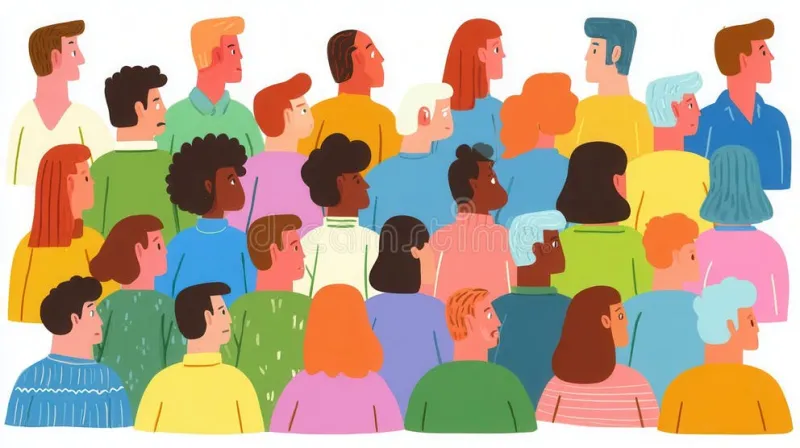
A person might start their morning with a political commentary podcast that makes them feel sharp and informed. By lunch, they're deep in a beauty creator's comment section feeling like they're hanging out with a friend. By evening, they're participating in a live stream for a gaming channel where the chat moves so fast it feels like a crowd at a concert. Three completely different communities. Three completely different versions of connection. Same person.
Psychologists have a name for the emotional bond that forms with media figures you've never met: parasocial relationships. The term's been around since the 1950s, coined by researchers studying TV audiences. But what's different now isn't the existence of these bonds — it's the volume of them, and how deeply they can go. A YouTuber who posts three times a week and responds to comments creates a feedback loop that a network TV star from 1987 simply couldn't replicate.
Why Your Brain Treats Creators Like Friends (Even When It Knows Better)
Your brain, bless it, is not well-equipped for the modern internet. The social circuitry that evolved to track relationships in small, tight-knit communities doesn't have a built-in filter for "this person doesn't actually know you exist." When a creator looks into a camera and says "okay, so you guys know how I feel about this" — your brain logs that as a direct address. It registers familiarity. It stores it alongside your actual relationships.
Over time, repeated exposure builds what researchers describe as a sense of intimacy through one-sided interaction. You learn a creator's opinions, quirks, history, sense of humor, and pet peeves. You develop expectations. You feel genuine concern when they're going through something hard. You feel genuine joy when something good happens to them. These aren't fake feelings — they're real emotional responses produced by a very human brain doing exactly what it was designed to do.
The twist is that this is happening in parallel across multiple relationships. You're not choosing between your parasocial bonds the way you might have chosen between fandoms in the past. You're stacking them.
What This Does to Your Sense of Community and Identity
There's something genuinely interesting — and a little disorienting — about what this multi-fandom life does to identity. Each fan community you participate in carries its own norms and values. The version of you that shows up in a true crime podcast subreddit is probably different from the version of you that comments in a cozy cooking channel's community tab. You're not being fake in either space. You're just activating different facets of who you are.
This is actually one of the more underrated aspects of modern fandom culture: it gives people permission to be multidimensional in their interests and identities in a way that prior generations' more monolithic fan culture didn't always allow. You don't have to be just a sports person or just an art person. You can be both, plus a subscriber to three different educational channels and a devoted listener to a very niche podcast about regional American food history.
But fragmentation has its costs too. When your sense of community is spread across ten different platforms and twenty different fandoms, the depth of any single connection gets diluted. You might feel like you belong everywhere and nowhere at exactly the same time. And when a creator you've followed for years pivots their content, burns out, or does something that breaks the illusion of closeness — the loss can feel surprisingly real and surprisingly hard to explain to people who don't get it.
The Blogos Reality: Every Voice Adds a Thread
What makes this moment genuinely fascinating is that fandom isn't just a passive experience anymore. Across platforms like this one, fans are also creators — adding their own voice to the pile, building their own small communities, generating their own parasocial bonds with readers or followers who feel connected to them. The line between audience and author is blurring in real time.
Every person reading this article probably has at least one creator they feel inexplicably close to, and at least one fandom they'd feel weird explaining to a coworker. That's not a bug in how we're consuming media. It's a feature of how humans are adapting to an information environment that previous generations couldn't have imagined.
You're a Swiftie and a true crime obsessive and a devotee of that one guy who makes incredibly detailed videos about obscure historical battles. All of those things are true at once. All of those communities are real. And the feelings you have about all of them — complicated, layered, and occasionally a little embarrassing — are completely valid.
The parasocial paradox isn't something to fix. It's something to understand. And maybe, now that we're talking about it, something to navigate a little more intentionally.