Forget the Mainstream: Why the Weirdest, Most Specific Fandoms Are Actually Running the Show
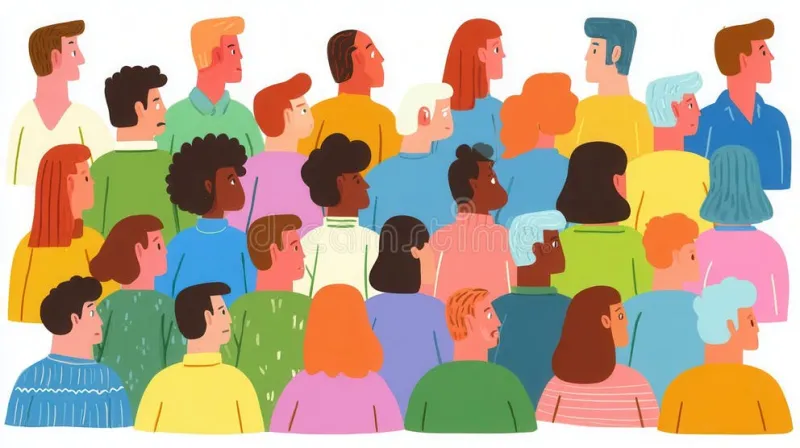
Photo: diverse niche fandom community people watching celebrating specific interest, via thumbs.dreamstime.com
There's a corner of TikTok dedicated entirely to people who restore antique typewriters. Not write on them. Not collect them. Restore them. Detailed, methodical, oddly satisfying videos of someone disassembling a 1950s Underwood and bringing it back to life, key by key.
The biggest accounts in this micro-niche have hundreds of thousands of followers. Brand deals. Merchandise. A devoted comment section that treats every new restoration like a community event.
Now ask yourself: when was the last time a piece of broadly appealing, designed-for-everyone entertainment made you feel like that?
The Death of the Lowest Common Denominator
For most of the 20th century, entertainment was built around the idea of maximum reach. TV networks, movie studios, radio stations — they all chased the biggest possible audience, which meant content that offended nobody and deeply excited nobody either. The lowest common denominator was the goal, even if nobody called it that.
The internet was supposed to democratize all of this, and in some ways it did. But what nobody fully predicted was that giving everyone a platform wouldn't just produce more of the same — it would produce an explosion of the specific. People didn't just want more content. They wanted their content. Content that felt like it was made for them, not for a Nielsen demographic.
What we're living through now is the downstream effect of that shift, and it's bigger than most mainstream media coverage suggests.
Your Niche Is Someone's Whole Personality
Let's get concrete about what "niche" actually looks like in 2024 America, because the range is genuinely staggering.
You've got the aesthetics crowd — cottagecore, dark academia, goblincore, and a dozen other visual identities that started as Tumblr tags and evolved into full lifestyle frameworks with dedicated shopping guides, playlist curation, and community meetups. You've got the micro-genre anime fandoms who will argue with tremendous passion about the distinctions between isekai subgenres. You've got competitive reality TV communities that have built entire analytical ecosystems around shows that barely crack two million viewers.
And then there's the stuff that genuinely defies easy categorization — the people deeply invested in a specific era of professional wrestling, or a single author's extended universe, or a regional food culture that gets almost zero national coverage.
What all of these communities share is intensity. Engagement levels that broad-appeal content can only dream about. Members who don't just consume — they participate. They create fan art, write analysis, organize online and in-person events, and evangelize to anyone who will listen.
That intensity has value. Enormous value, as it turns out.
Studios Are Paying Attention (Finally)
Here's where it gets interesting for anyone who cares about the future of entertainment: major studios and streaming platforms are actively watching niche communities for signals about what to develop next.
It's not a coincidence that we've seen a wave of extremely specific adaptations in recent years — projects pulled from beloved but relatively obscure source material, catering to audiences that studios once would have considered too small to bother with. The calculation has changed. A passionate niche audience of two million people who will watch something three times, buy the merchandise, and generate enormous organic social buzz can outperform a lukewarm audience of twenty million who forget the show exists by Tuesday.
This logic has started to filter into development conversations in visible ways. Streaming platforms are greenlit projects that would have been laughed out of a network pitch meeting a decade ago, because the data shows that serving a specific audience well beats serving a general audience adequately almost every time.
"Niche audiences are the most valuable marketing asset a piece of content can have," one entertainment industry consultant noted in a recent trade publication. "They do the work for you."
The Community Is the Content
One of the most underappreciated aspects of niche fandom culture is that the community itself often becomes more compelling than the source material it formed around. This is something the internet figured out years before Hollywood caught on.
Think about how many people are genuinely more invested in the discourse around a show than in the show itself. The fan theories, the reaction videos, the heated Reddit debates, the inside jokes that only make sense if you've been in the community for at least six months — that's a whole second layer of entertainment that didn't exist in the broadcast era.
For younger audiences especially, this participatory dimension isn't a bonus feature. It's the main event. Watching something alone and forming private opinions about it feels almost incomplete compared to the experience of watching something as part of a community and processing it collectively in real time.
This is why platforms that enable community interaction — Discord, Reddit, even old-fashioned fan forums — remain so sticky even as individual pieces of content come and go. The community outlasts the content that created it.
What This Means for the Rest of Us
If you're someone who still occasionally enjoys a big, broadly appealing blockbuster or a network procedural, none of this means those things are going away. Mass entertainment isn't dead. But its cultural authority is genuinely eroding, and the niche communities filling that space are doing so with a confidence and creativity that's hard not to find exciting.
At Blogos, the whole premise is that every topic and every voice deserves a place at the table — and honestly, niche culture is living proof that this approach works. The typewriter restorers, the cottagecore devotees, the obscure anime scholars — they all found each other, built something real, and in doing so, changed what entertainment can look like.
The mainstream used to set the terms. Now it's scrambling to catch up with a thousand conversations it wasn't invited to.
And that, more than any single trend or viral moment, might be the most significant shift in American entertainment culture in a generation.